
Trail light dog backpackUpdated a month ago
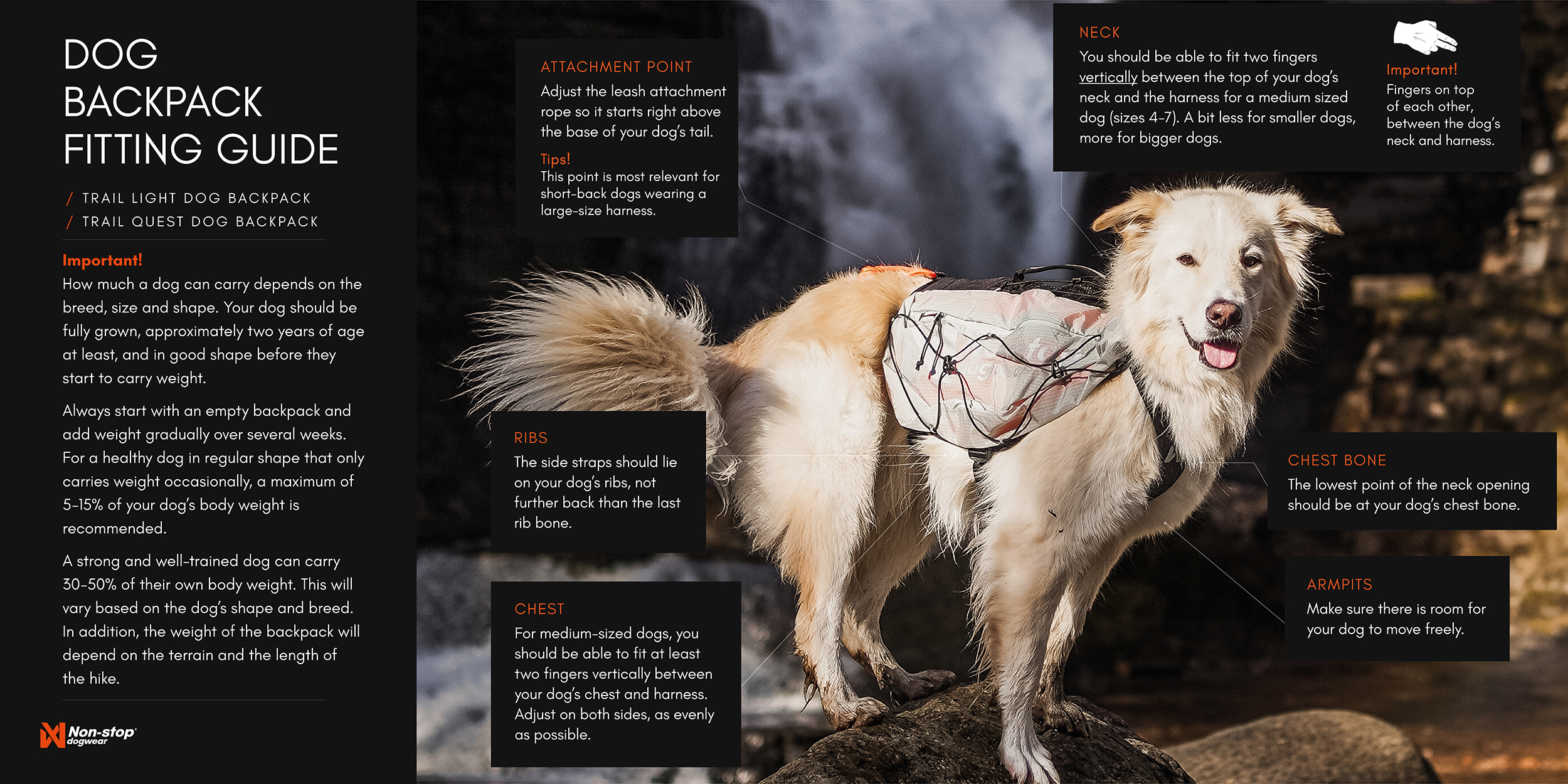
1 – Chest
For medium-sized dogs, you should be able to fit at least two fingers vertically between your dog’s chest and the harness. Adjust as even as possible on both sides. After initial adjustment for your dog, lock the chest straps by simply threading strap through the slip lock.
2 – Neck
Use the straps on top of the neck to adjust the harness. You should be able to fit at least two fingers vertically between the top of your dog’s neck and the harness for a medium-sized dog (size M). A bit less for smaller dogs, more for bigger dogs.
Important!
Fingers on top of each other, between your dog’s neck and the harness.
3 - Armpits
Make sure there is room for your dog to move freely.
4 - Ribs
The last strap should lie on your dog’s rib cage, not further back from the last rib bone.
5 – Attachment point
Adjust the leash attachment rope so it starts right above the base of your dog’s tail.
6 – Pockets
Place the heavier items close to the shoulders. For sizes M and above, adjust the side compression bungees from inside the pocket. The pocket's content should bounce as little as possible.
Important !
How much a dog can carry depends on the breed, size, and shape. Your dog should be fully grown, approximately two years of age at least, and in good shape before they start to carry weight. Always start with an empty backpack and add weight gradually over several weeks. For a healthy dog in regular shape that only carries weight occasionally, a maximum of 5-15% of your dog’s body weight is recommended.
A strong and well-trained dog can carry 30-50% of their own body weight. This will vary based on the dog's shape and breed. In addition, the weight of the backpack will depend on the terrain and the length of the hike.
You can find more tips on fit and adjustments here: How to fit and adjust Trail quest and Trail light dog backpacks?